The brief
The phrase 'link in bio' describes a workaround — a single permitted URL in a field that wouldn't allow more. We named the category after the constraint. The constraint is gone. The name isn't.
Pay attention to the phrase itself. Link in bio. It is one of the strangest little names any product category ever adopted, because it doesn't describe what the product does. It describes where a platform once allowed you to put a URL.
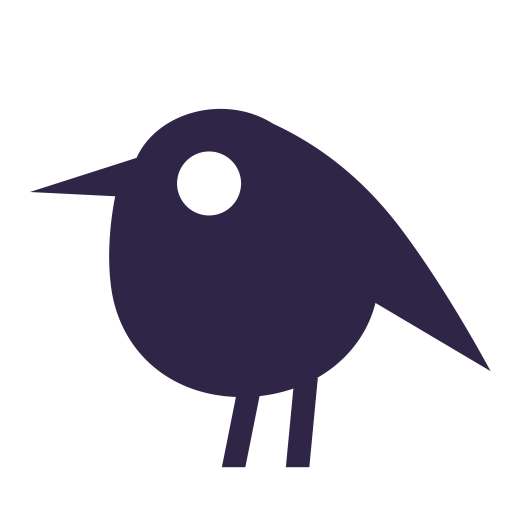
"Bio" is the little text field under your name on someone else's app. "Link" is the single address that field grudgingly permitted. "Link in bio" is the instruction you typed because the field wouldn't let you add a second one. The entire category is named after a constraint imposed by Instagram's profile schema around 2015. We named the bird after the cage.
This matters more than it sounds, because names shape what a category is allowed to become.
A name that encodes a limitation
Most category names describe a function. "Search engine" tells you it searches. "Spreadsheet" tells you it spreads data across a sheet. "Word processor" — it processes words. The name points at the job.
"Link in bio" points at nothing the product does. It points at a restriction in a host platform — you get one link, and it goes in your bio — and then memorializes that restriction as the identity of an entire tool category. It's as if we'd named the automobile "horse-not-required" — defining the new thing by the absence in the old arrangement it replaced, freezing the workaround into the noun.
And once the workaround is the name, the workaround becomes the ceiling. A "link in bio" tool, by its own name, is a thing that helps you with the problem of having one link. So the whole category optimized for that: more links, prettier buttons, a tidier list. It built better and better versions of a list, because the name told it that a list was what it was. The name was a constraint disguised as an identity, and the category obeyed it for a decade.
The constraint is already gone
Here's what makes the name actively absurd now: the limitation it encodes barely exists anymore. Platforms allow multiple links. The "one URL" problem that birthed the category has been quietly solved by the hosts themselves. The cage door is open.
Which means the category is still named after a constraint that no longer binds. We're calling these tools "link in bio" the way we'd call a smartphone a "pocket telegraph" — a name from a world two technological generations back, describing a problem the thing has long since left behind. The phrase is a fossil. It tells you what the internet wouldn't let you do in 2015, not what's possible now.
And what's possible now isn't a longer list. The list was always the cage-shaped solution to the cage-shaped problem. When you stop accepting the cage, the question changes from how do I fit more links in this field to what should the page between me and a stranger actually do — and that question has nothing to do with links at all.
What the bird actually is
Drop the name and look at the thing itself. A page stands between you and everyone trying to reach you. What is it for?
It's for meeting people. For finding out who's arriving and what they want. For deciding, in the moment, which of them you should actually spend time on. For remembering them afterward. The links were never the point — they were the only thing the cage permitted, so they became the whole vocabulary. But the actual job, the bird inside, is qualification and connection and memory. The job is the conversation that happens when a stranger arrives, not the directory of places they could click instead.
A list can't do that job. A list is what you build when you've accepted that the page is allowed to be one thing: a set of doors pointing elsewhere. The moment you reject the premise, the page stops pointing away and starts doing something itself — asking, listening, sorting, keeping. That's not a better link in bio. It's a different animal that was never going to be named correctly by a phrase about URL fields.
Why the language has to change
Categories get stuck inside their names. As long as the thing is called "link in bio," every conversation about it starts inside the cage — comparing button styles, debating how many links, optimizing the list. The name pre-loads the limitation into every discussion. You can't think your way out of a category while using the word that defines it by its constraint.
So the language has to move first. Not because naming is marketing — because naming is permission. A new name for what the page does — the link that talks back, an emissary, a front door that responds — is how the category gives itself permission to stop perfecting the list and start doing the job the list was only ever standing in for.
"Link in bio" named the cage. It did its job for the era of the one permitted URL. That era is over. It's time to name the bird. Say hello to Parlei.
Parlei is in early access — built for what the page is actually for, not for the constraint it was once named after. If that distinction lands, ask for an invite.